
Alliance Resident Lookup Coverage
There is no single official list of every person in Alliance. A useful resident lookup starts by naming the fact to confirm. The Stark or Mahoning property roll is designed to identify a parcel owner, property situs, and tax correspondence address. Ohio’s voter tool checks an individual registration with a name and county. Court and probate records document public legal events, while certificate, archive, business, and license sources answer narrower questions. Each result has its own date and scope, so it should not be stretched into a claim about every person at an address.
| Record | What it confirms | Official keeper | Access and limit |
|---|---|---|---|
| Property and tax roll | Parcel owner, situs, tax mailing data, and sale context | Stark Real Estate Search or Mahoning Auditor | Free search; it does not identify every occupant. |
| Recorded document | Parties to a conveyance and legal-description trail | Stark County Recorder | Portal and counter; online cutoff was not verified. |
| Voter record | Permitted elector identity, address, precinct, and history fields | Ohio Voter Lookup | Name plus county; protected data and participants are omitted. |
| Court or probate docket | Party role, case number, filing date, and public docket activity | Stark Clerk or Probate | A docket is not proof of a current address. |
| Vital record route | Documented birth, death, marriage, or divorce event | Alliance Health Department, Probate, or Clerk | Application, custodian, and restrictions vary by record. |
| Credential or entity record | License status or stated statutory-agent affiliation | eLicense Ohio or state business records | Neither is a home-address directory. |
For a one-person question, begin with the record that is actually built for the known fact. A parcel and owner clue belongs in the county property system. A known case event belongs in the court index. A dated family-history question may belong with a local registrar, probate archive, or library. When two independent records share the same name plus another reliable detail, such as a date, legal description, or stated relationship, the Alliance resident lookup has a stronger footing.
Alliance Lookup County Check
Alliance is principally in Stark County, but its municipal footprint reaches Mahoning County. An Alliance mailing city alone does not identify the right court, recorder, auditor, or board-of-elections path. Confirm the actual parcel or case venue before search terms are entered. Stark-side property work starts with the Stark Auditor and Recorder. A Mahoning-side parcel requires the Mahoning Auditor, GIS, Recorder, and, where relevant, the Mahoning court route. This simple check prevents a clean search in the wrong county from being treated as a negative result.
Mahoning eCourts is the alternate-county Common Pleas search route when the matter belongs there.
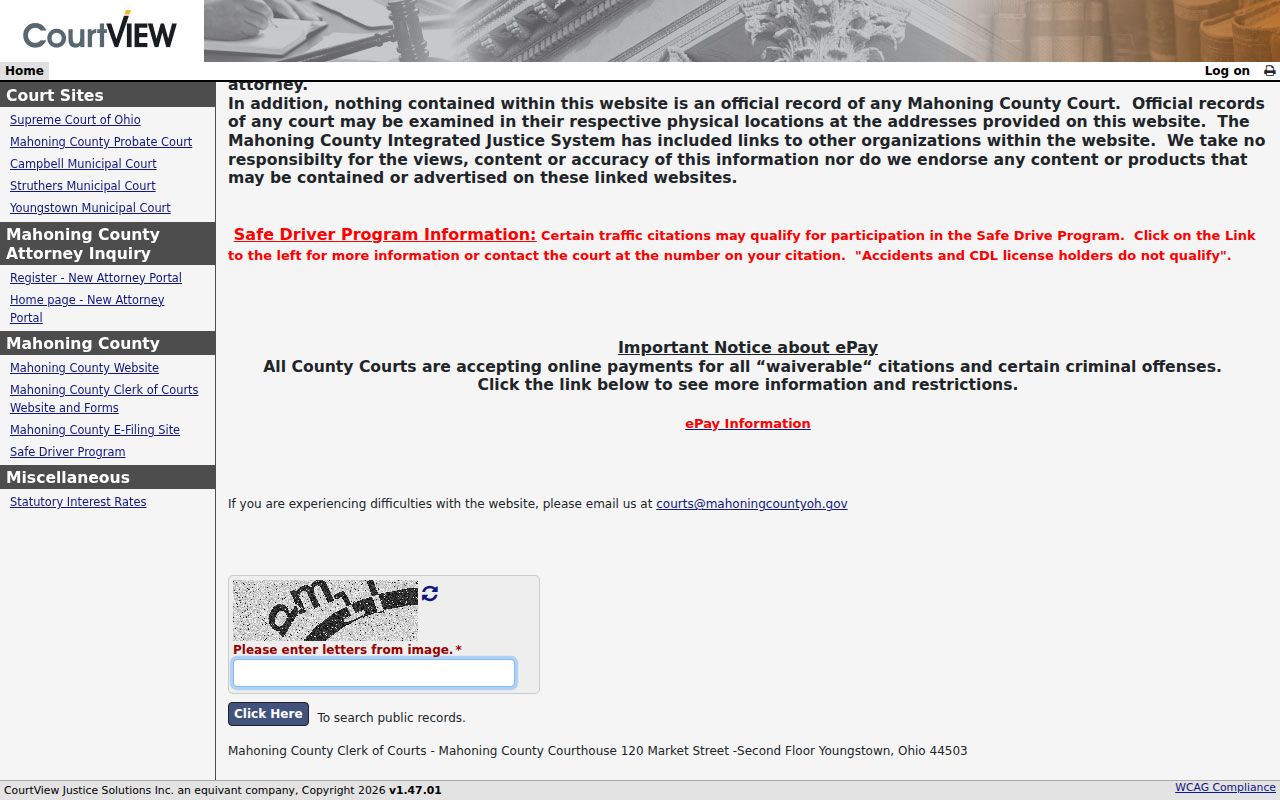
The Mahoning search screen is a reminder to verify county and venue before treating a name result, or no result, as meaningful.
Note: Keep the parcel number and legal description with the county name when moving between Alliance record systems.
Verify an Alliance Property Match
A property card can anchor a name to a specific parcel, but it has limits. Stark’s card can expose a PIN, tax year, site address, legal description, owner, owner and mailing addresses, values, sale information, prior owner, and tax details. The site address is the property location, also called the situs. A mailing or billing address is where correspondence goes and can be a post office box, agent, business, or another residence. Neither field proves that every person at the site lives there.
For a stronger ownership finding, carry the PIN and legal description to the Recorder. Search the current owner as a grantee, inspect the recorded instrument, and compare the document number, parties, recording date, and legal description. Then follow the seller as an earlier grantee only when the legal description remains consistent. The recorder portal did not expose a verified address-search mode during research, so an address alone is not a safe substitute for that chain.
Alliance Voter Lookup Boundaries
Use the Ohio Voter Lookup to confirm an individual’s permitted registration information, not to browse a neighborhood. First Name, Last Name, and County are required. After a match, a Street Name selector can help distinguish same-name candidates. Ohio’s own guidance suggests trying a familiar name form, a former surname, or a previous county when an expected match does not appear. Choose Stark for most Alliance addresses only after the county check.
The public database may include an elector’s name, birth date, residence address, precinct, registration date, participation history, and last activity date. Participation history records elections in which a person took part. It never reveals a ballot choice. Social Security and state-ID numbers, phone and email data, protected addresses, and Safe at Home information are excluded. A nonmatch may mean a name variant, county issue, or protected record, not that a person has never lived in Alliance.
Alliance Voter Data Numbers
The Ohio voter-data portal is a separate public-records channel, not a faster individual name search. It describes more than 8 million registrations, more than 60,000 county files, and several terabytes of data. Its daily request form uses Election, Start Date, End Date, County List, Search, and Clear. A request can select one date and county, while a custom package can include up to 87 counties and seven days. It requires the requestor’s first and last name and email, may queue for up to 24 hours, and expires after 72 hours.
A precisely dated Stark County file is more defensible than a huge download. The portal says the source files are unmodified, snapshots are made about 4 p.m. and transmitted by 11:59 p.m., and data is retained at least 22 months after an election. Protected voter information remains excluded. Use the individual Voter Lookup for a named person’s permitted registration question, and use a dated county request only when that is the actual record needed.
For an election-specific or older question, Ohio law also allows public inspection and convenient precinct lists at a Board of Elections, subject to protected-voter rules and office procedure. Name-and-address copying may be paused from 21 days before through 11 days after an election if it would interfere with election duties. Ask the appropriate county board before a visit, especially for an Alliance address in the Mahoning portion.
Note: A voter-record match confirms only permitted registration fields at the record date, not ballot choices or household composition.
Alliance Court Record Trails
Alliance Municipal Court is the local limited-jurisdiction entry point, with Online Services, forms, fees, and rules. The current external form’s field list was not reliably exposed in the research, so use the court’s live services entry or call the clerk instead of assuming filters or years. The official court page is the right starting point for an identifiable municipal matter, not a general people list.
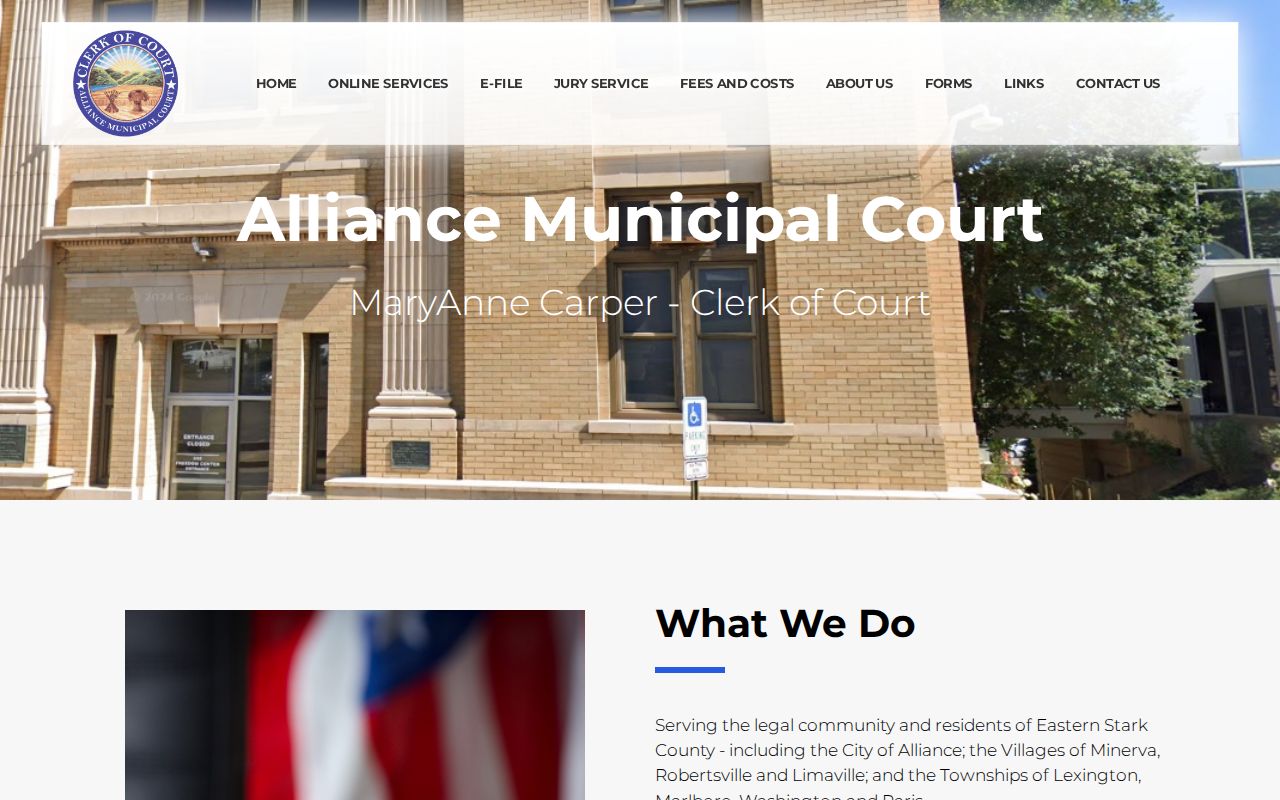
The municipal-court image documents the official entry point, while a result must still be checked for the correct party and case.
The Stark County Clerk of Courts is the county trial-court route for Common Pleas criminal, civil, domestic-relations, and appellate matters. Its computerized dockets begin January 1, 1985. Earlier indexes are available at the County Office Building counter. For an actual filing, record the case number, division, filing year, and party spelling before asking for pages. The Clerk says it does not have to create a record or perform open-ended research.
The access route is not limited to the docket screen. The Clerk permits inspection during business hours, charges 10 cents per paper page, and says e-mailed documents have no charge apart from actual delivery or supply cost where applicable. Its mail-copy practice calls for party names, filing year, a $5 check or money order, and a self-addressed stamped envelope. Ask the specific division about certified copies or an archived file before sending payment.
The Clerk’s official docket entry is the county route for the verified computerized record period.
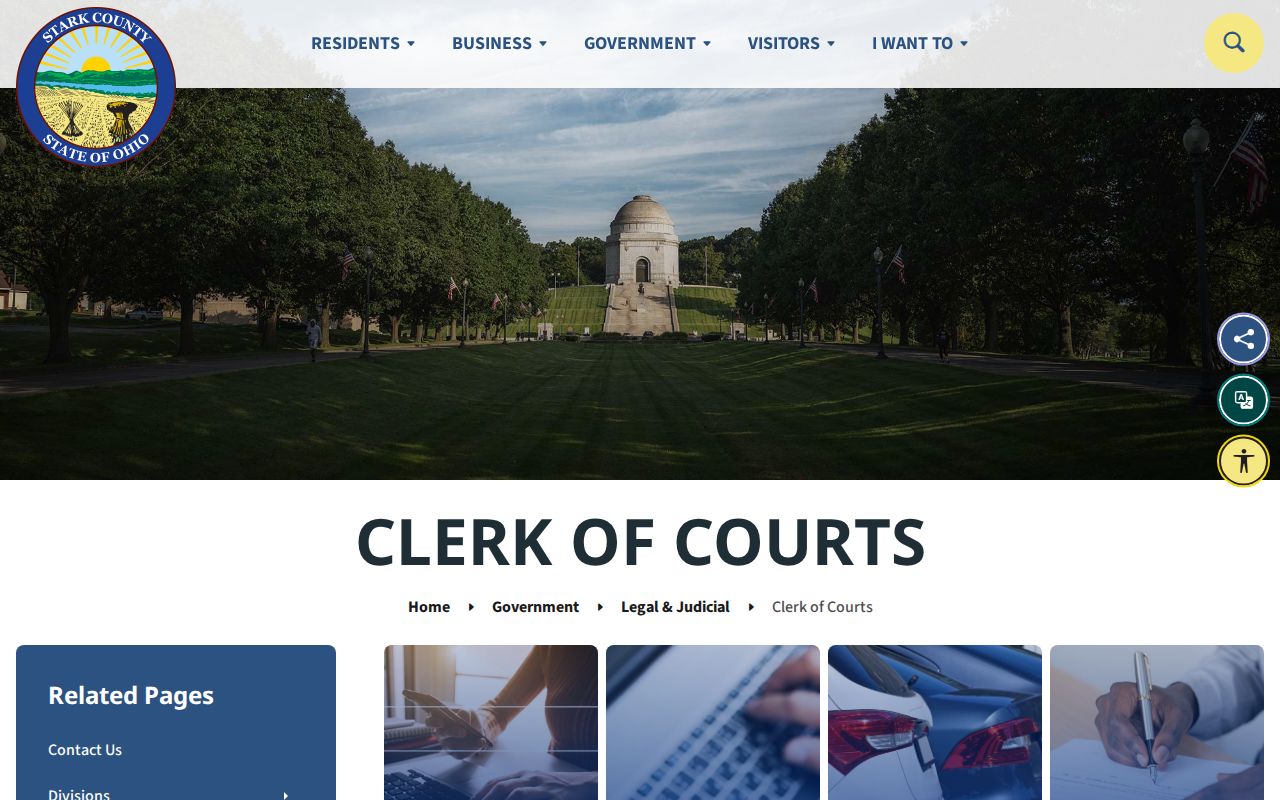
Use the case identifier shown by the official system when asking the Clerk for a public copy or an explanation of the counter route.
| Party name | Identifies a named participant, subject to spelling and same-name checks. |
|---|---|
| Case number | Connects a result to the correct file and division. |
| Division or case type | Shows the court context; it should not be used to infer an outcome. |
| Filing year or date | Places the record in time and helps direct a copy request. |
| Docket events | Record court activity using the on-screen wording rather than guessing disposition. |
Note: A public court index identifies a case lead; the official custodian determines whether a requested file is public, sealed, redacted, or certified.
Alliance Probate and Vital Routes
Stark Probate Court keeps a separate path for marriage, estate, guardianship, will, and probate matters. Its website describes a public web index, docket, and images for pending cases where not confidential, while the counter holds the official record. Probate is useful for a documented heir or estate trail, not a shortcut to a private contact. Estate files can name fiduciaries, beneficiaries, counsel, and dates, but each address is an address in a filing at that time.
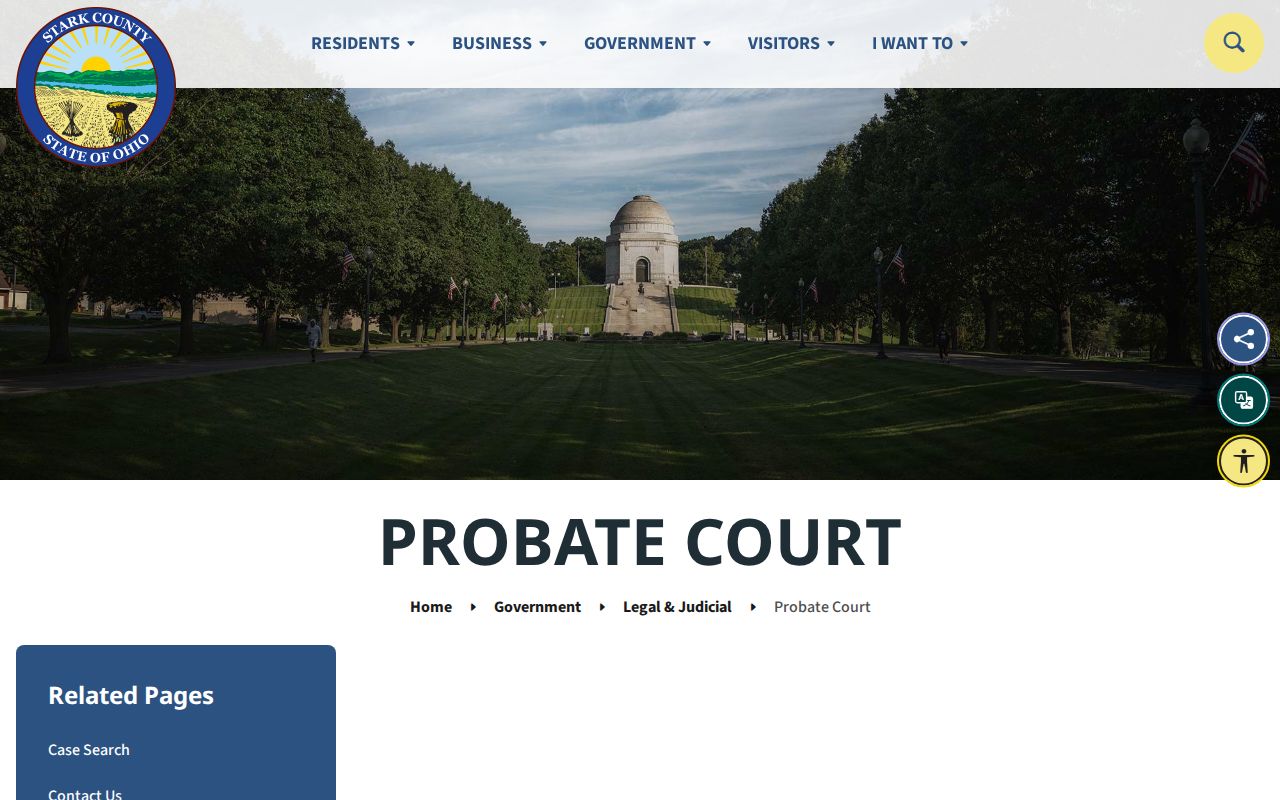
The Probate search image shows the separate county entry point for public case information and reinforces the need to confirm confidentiality before relying on a result.
For certificates, the Alliance City Health Department is a local registrar, not a public online name index. It states that certified birth and death copies cost $25 and that any person born in Ohio can obtain a birth record there through the statewide birth database. Under Ohio Rev. Code §3705.23, a signed application and fee generally permit a certified copy unless a stated exception applies. Medical-use birth information remains restricted, and a decedent’s Social Security number is withheld for the first five years except for qualified requesters. Stark marriage copies come from Probate, and divorce copies from the issuing county Clerk.
The state mail route is ODH Vital Statistics, P.O. Box 15098, Columbus, OH 43215-0098, 614-466-2531. The CDC custody guide reports a $21.50 state fee, ODH birth records from December 20, 1908, and ODH death custody from 1971 forward; verify the current ODH instructions before ordering. Ohio History Connection is the historic death route for 1908–1970 in that guide. The local counter, state mail route, Probate, and issuing Clerk each serve different record types and periods.
Note: A certificate application can obtain a copy under the controlling rule, but it does not create a public online name index.
Verify One Alliance Resident
Same names are common enough that a single screen result should never settle an Alliance resident lookup. Compare two independent details, such as a parcel legal description and a deed, or a directory address and an event record. Write down middle initials, suffixes, former surnames, spouse or parent names when already present in an official source, approximate dates, address, and county. If those details conflict, pause rather than trying to force a match.
- Start with the narrowest known fact. Use the county property roll if a parcel is known, or the voter tool for an individual’s own registration question.
- Capture the date, county, address role, and exact spelling shown by the result. Do not replace a situs address with a mailing address.
- Check a second official record that answers a different question, such as a recorded deed, public court docket, probate file, or correctly issued certificate.
- Request a copy from the named custodian only after the identifier, time period, and record series are clear. A focused Ohio Public Records Act request seeks an existing record; it does not ask staff to build a new profile.
- Docket
- A court’s running index of a case and its recorded events. It is a case lead, not the complete official file.
- Index and image
- An index points to a record by name or number. An image is a view of the document itself, when public and available.
- Certified copy
- A copy issued by the custodian with the certification needed when an official copy is required.
Alliance License Record Clues
eLicense Ohio is a public verification system supplied by participating boards and updated daily. It offers Individual or Business selection, first and last name, license number, Board Name, and Search. A detail can show the credential holder’s name, board, license type and number, status, dates, city or state, Board Action, and endorsements where present. It is a way to check a known credential, not a source for a person’s home.
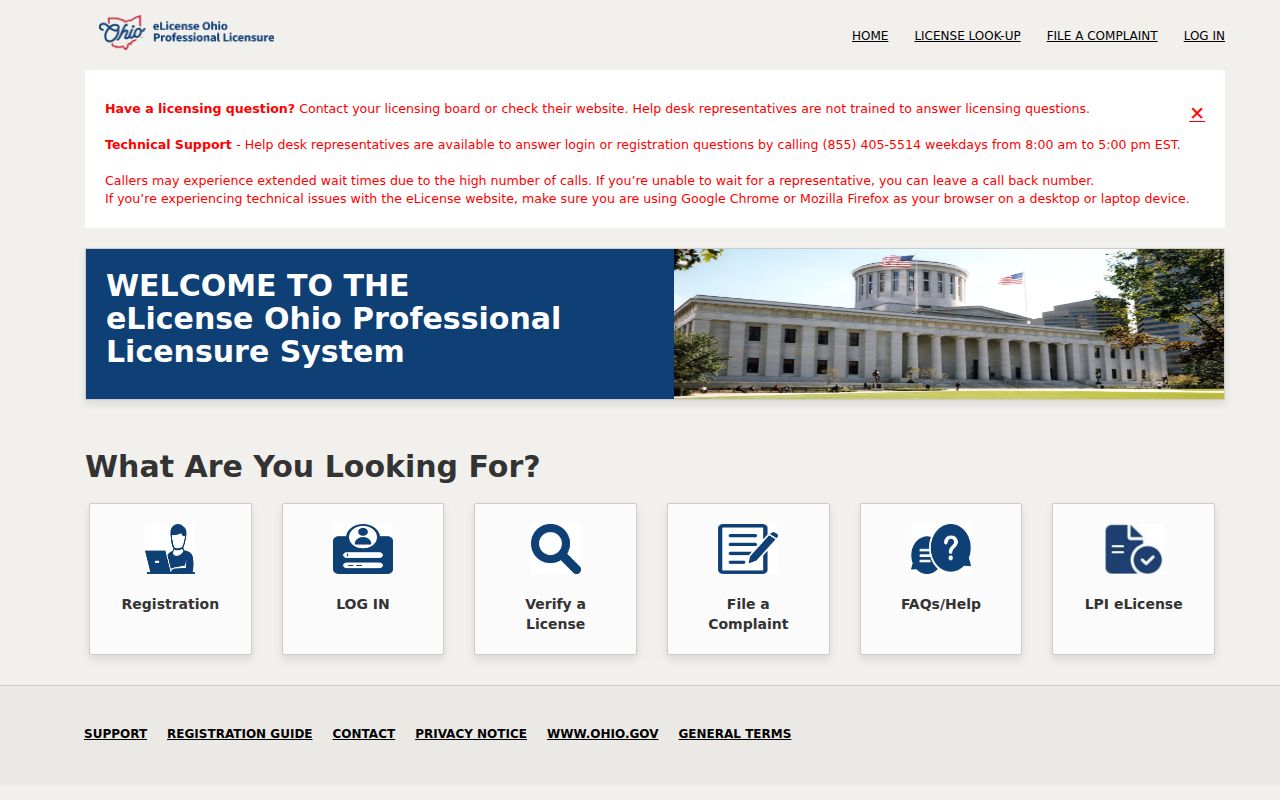
The official license screen is most useful when a board or license number is already known and can be compared with another record.
Ohio business records provide a different affiliation check. The state recognizes Business Name, Filing Number, and Agent or Registrant as search concepts, but says it does not maintain a list of owners or officers. Record an entity filing number and date if it matters to a known connection. Do not turn a statutory-agent listing or a city shown in a credential into a residential claim.
Note: A credential can verify a stated professional status, while a city display or business filing remains an affiliation clue rather than an address confirmation.
Alliance Resident Lookup Scope
The Ohio Department of Rehabilitation and Correction Offender Search has a distinct and narrow scope. It concerns state incarceration and supervision records and is not a current-address directory. A last recorded address, when any system displays one, cannot establish present location. For an unknown jail claim, verify an actual case number through the official court or Clerk rather than relying on an unofficial copy of a record.
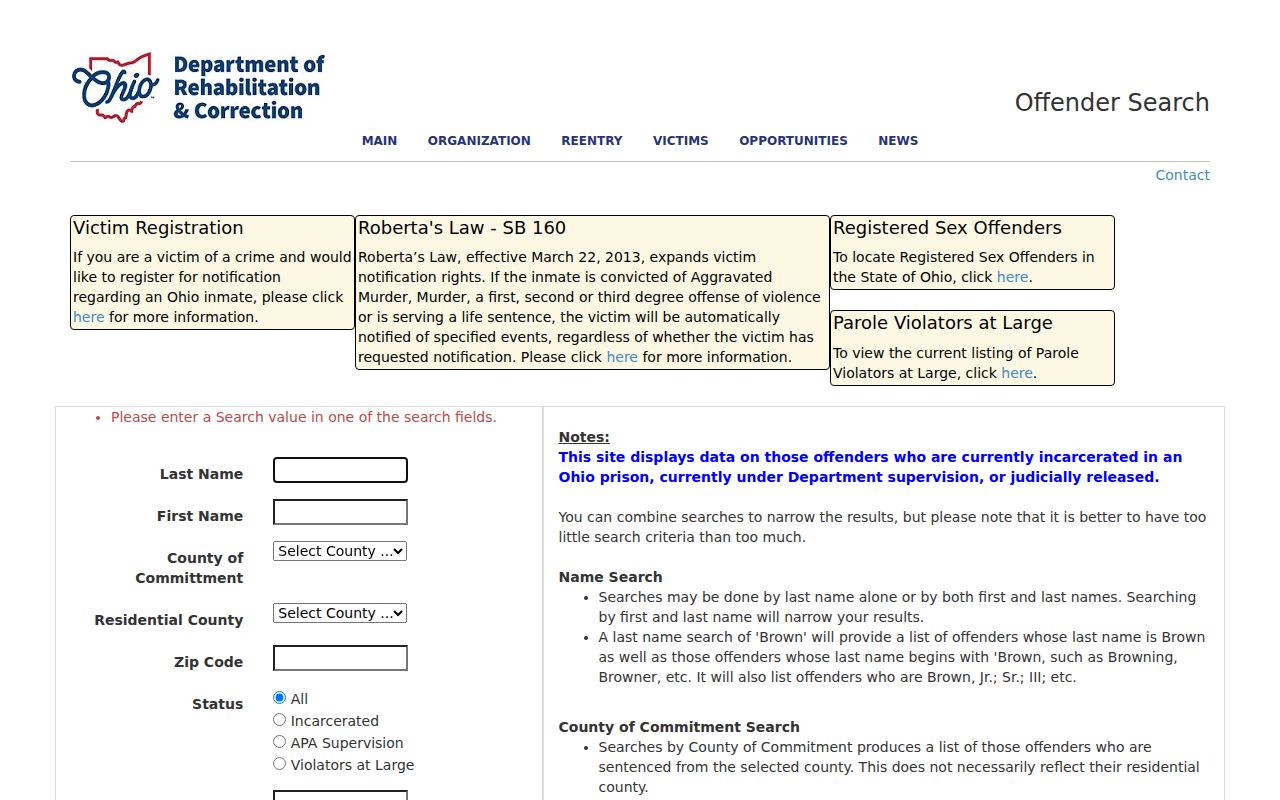
The state search interface should be read within its stated correctional scope and never as a substitute for an Alliance residence record.
Alliance Resident Lookup Limits
The Ohio Public Records Act, Ohio Rev. Code §149.43, provides a route to inspect existing public records promptly during regular office hours and obtain copies within a reasonable time, subject to exceptions. Inspection is free, and ordinary duplication is limited to actual cost. A requester need not give a name or purpose, although an office can ask after explaining that the detail is optional and would help identify, locate, or deliver the record. Be specific about the custodian, record type, name or address, date range, and desired medium.
Some records properly stop the search. Safe at Home participants are removed from public voter lists and the statewide database. Court files can be sealed, expunged, or redacted. Birth medical information and protected motor-vehicle data are not open to a name search. If online information appears wrong, ask the custodian that created it about its correction or amendment process. Ohio law can require disclosure of an existing releasable record, not a new compilation or a way around a confidentiality rule.
Lawful use. Use Alliance resident lookup results for personal, lawful research. Ohio law prohibits stalking, threats, intimidation, and harassment, and protected records must remain protected.