
Alliance City Directory Collections
Rodman Public Library’s Alliance Room gives the local collection its backbone: physical Alliance directory volumes from 1876, Alliance Review microfilm from 1871 to the present, census information, yearbooks, clippings, and local historical material. The free Alliance Memory collection provides full-text access to two confirmed compound volumes. Those online scans are excellent starting points, but Reference staff can supply the in-between years and identify a street or reverse volume that a general search misses.
| Alliance collection | Years | Where held | Access |
|---|---|---|---|
| Physical directory volumes | From 1876 | Rodman Alliance Room | Reference-staff access; name, street, and occupation context. |
| McKee Business Directory | 1868 | Alliance Memory and Rodman | Free full-text 192-page digitized volume. |
| Official Alliance historical volume | 1897–98 | Alliance Memory and Rodman | Free full text; people, firms, street, classified, and civic lists. |
| OGS Alliance directory holdings | 1948, 1950, 1952, 1961, 1967–68, 1972, 1974, 1987–89, 1993 | Ohio Genealogical Society Library | Check the catalog before visiting. |
| Alliance Review | Microfilm 1871–present; digitized ranges noted locally | Rodman and Ohio Memory | Notices, ads, obituaries, and address context. |
There is no verified first-and-last-printing chronology for every later Alliance directory publisher. A missing year online is a reason to ask Rodman, not evidence that no directory was issued.
Alliance Directory Earliest Volumes
The 1868 McKee Business Directory is the earliest directly verified digitized Alliance volume. Its metadata identifies Stuart G. McKee and the Monitor Power Press at Commercial Block on Main Street. The 1897–98 Official Alliance historical volume was printed by R. M. Scranton Printing Co. and is much broader: its metadata describes alphabetical inhabitants, married women, firms and incorporated companies, a special street directory, classified businesses, Stark County justices and attorneys, and city, county, church, school, and association lists.
Open the Alliance Memory directory-volumes collection to search the digitized texts.
See the Alliance Historical Society local-history guide, the source for this collection view.
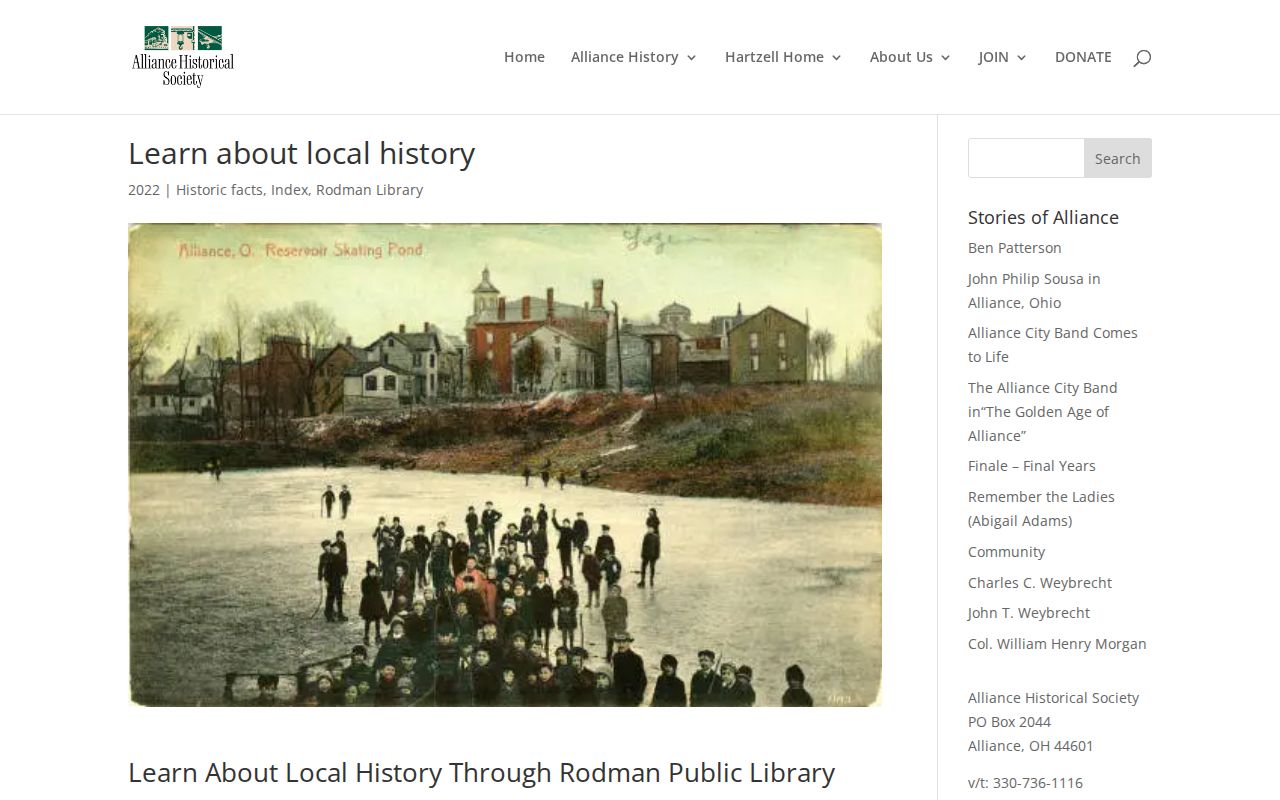
The local-history route leads from a digitized item to library holdings, maps, newspapers, and people who can help locate a particular year.
Directory details can distinguish same-named people. A period occupation or named business, when printed, is a historical search term rather than proof about an individual beyond that edition. Alliance’s industrial and railroad history makes that context especially useful when comparing names and addresses.
Alliance Directory Shelf Access
Rodman Main Library is at 215 E. Broadway in Alliance. Research recorded posted hours of Monday through Wednesday from 10 to 8, Thursday through Friday from 10 to 6, Saturday from 10 to 4, and Sunday closed. Call Reference staff at 330-821-2665 before a trip to ask about the Alliance Room, a requested directory year, Review microfilm, or in-library database access. Some licensed genealogy material is restricted to the Main Library or branch even for cardholders.
Rodman’s genealogy and local-history resources also identify full editions of the Alliance High School Chronicle for 1910–1961, Review digitization, oral histories, HeritageHub notices, HeritageQuest, Fold3, and FamilySearch affiliate access. These companion sources can confirm a date or household relationship that a directory leaves out.
Note: Ask for the exact directory year and whether it has a street-order section before relying on an alphabetical volume alone.
Reading an Alliance City Directory Entry
A printed entry should be transcribed as it appears before it is interpreted. In the 1897–98 volume, a person entry can give surname and given name or initials, a spouse in brackets or parentheses where published, an occupation or business, a residence abbreviation, and a numbered street address. A business name or address may appear beside a person. The book records the publisher’s snapshot, not a complete census or a later location.
| Name | Surname, given name, or initials, with spelling worth preserving exactly. |
|---|---|
| Spouse notation | Bracketed or parenthetical information where the volume printed it. |
| Occupation or business | A period clue that can distinguish people with the same name. |
| Residence mark | res or rms can identify the type of printed address reference. |
| Address | Numbered street, often with a directional prefix that must be retained. |
| Street and classified lists | Additional routes from an address or business category to the edition’s entries. |
- Criss-cross directory
- An address-order section, when present, that can lead from a street to a published entry.
- Householder index
- An index arranged around heads of households or principal names, not a guaranteed full household list.
- Abbreviation key
- The volume’s own explanation of marks such as residence terms; inspect it before expanding an abbreviation.
Alliance Address-Order Listings
The special street directory in the 1897–98 Alliance volume is an address-first tool for a historical question. Search the street, then inspect the page because OCR can miss an initial, an abbreviation, or a direction. S Union, E Market, W Main, S Seneca, E Columbia, and W Ely appear in period material. Dropping a direction can turn a correct query into a false negative or a different street.
For current address-keyed property and deed work, use the Alliance street directory route instead of treating a historical listing as a present-day record. Sanborn maps from 1867–1970, municipal archives, and legal descriptions are better evidence for a suspected address change. No authoritative general Alliance renumbering year was located.
Alliance Preservation Story
Alliance Memory began in 2004 through a collaboration of Rodman Public Library, Alliance Historical Society, Alliance City Schools, the Negro History Club, Haines House, and Copeland Oaks, with State Library support. Its early holdings included photographs, oral-history material, and veteran interviews as well as local-history resources. That provenance matters: a city directory scan is part of a community collection, not an isolated name list.
Open the Alliance Historical Society, the source for this historical collection view, for its referral path to Rodman, Alliance Memory, Review material, maps, and yearbooks.
The Historical Society is a collection and referral channel. Arrange access by phone or email rather than assuming a universal personal-name database exists.
Trace Alliance City Directory Households
Directories bridge the long intervals between federal census releases. The Census Bureau’s 72-year release schedule means a directory can mark an intervening move while a census can supply household relationships that a directory omits. Start with a dated address or documented name and make a short chronology instead of treating one entry as a complete life record.
- Find the first plausible Alliance directory entry and copy its spelling, initials, spouse notation, address, occupation or business, and all abbreviations.
- Check the immediately earlier and later directory years at Rodman. Record an address change, widow notation, changed business reference, or disappearance without assuming its cause.
- Search the digitized 1868 and 1897–98 texts, then ask for physical volumes between them. Compare the street section with the alphabetic entry when available.
- Pair the directory year with the nearest released census, the Alliance Review, or a dated obituary/marriage citation to test household relationships and timing.
- Confirm ownership separately through the recorder and auditor records. A directory address is not proof of title.
A disappearance can mean a move, death, omission, or a change in the publisher’s method. Probate, cemetery, and newspaper sources may clarify it, but only after the directory trail is dated correctly.
Alliance Directory Record Timeline
The local record sequence has useful anchors, even though the full printing history is incomplete. It explains why a search may move from a scan to a shelf, a newspaper reel, or a county archive.
| 1868 | McKee Business Directory, a verified digitized business volume. |
|---|---|
| 1876 | Beginning of Rodman’s physical Alliance city-directory run. |
| 1897–98 | Official Alliance historical volume with alphabetical, street, classified, and civic material. |
| 1948–1993 | Selected Alliance directory years listed in Ohio Genealogical Society holdings. |
| 2017 | City/Rodman digitization returned 12,998 pages as 1,742 municipal-record PDFs for 1854–1924. |
Stark Probate archival collections, including historic marriage, will, estate, naturalization, and vital microfilm series, can extend a family history beyond the printed directory years. The court, library, and archive routes complement each other rather than duplicate one another.
Use the Stark naturalization search when an arrival year, origin country, vessel, or name is already known.
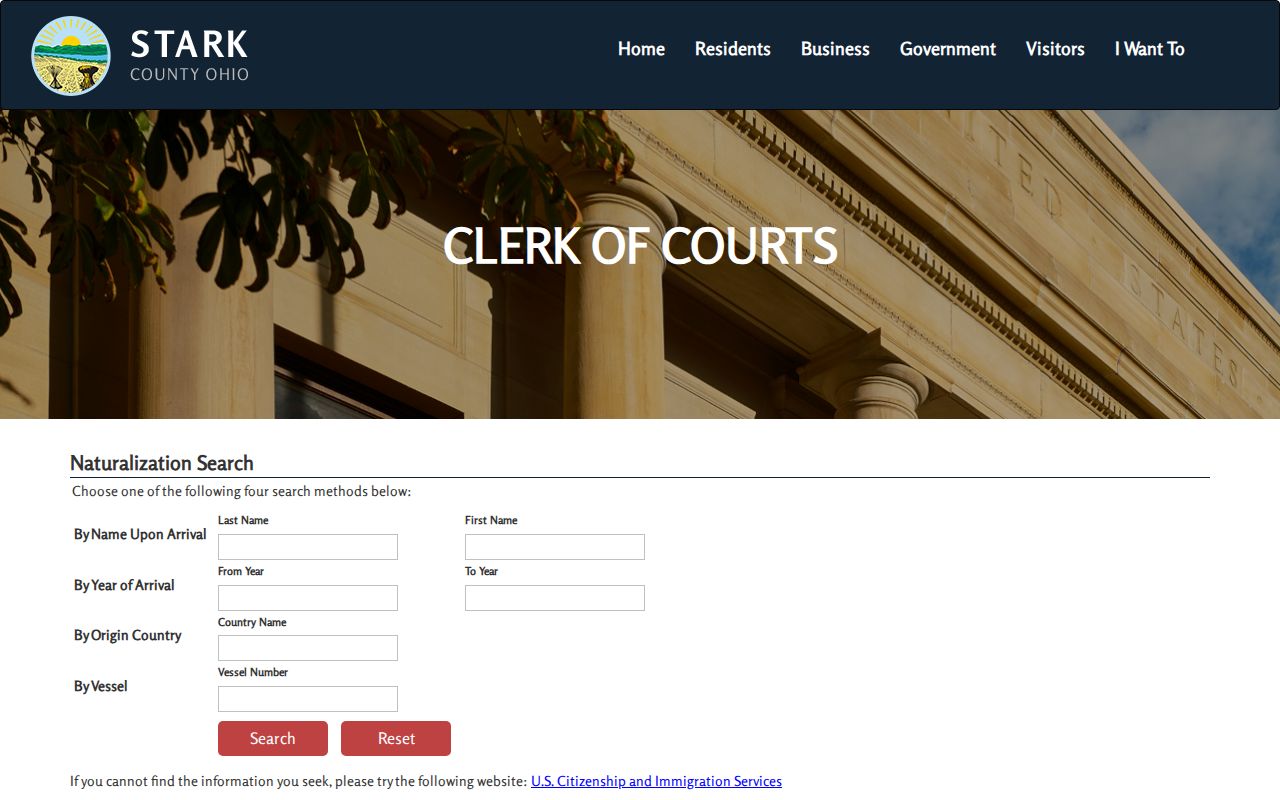
That county form offers a separate historic-name route and should be read as a docket or journal lead, not a modern address source.
Rodman’s Alliance Index is a useful end point when a directory name needs a dated obituary, marriage, or cemetery citation. It indexes Alliance Review articles, obituaries and marriage listings, library scrapbooks, and St. Joseph Catholic Cemetery burial listings. The first five requested scans from indexed material are free; later scans cost $1 per page, and mailed copies cost $2 for the first five plus $1 for each additional copy. A citation can support a request, but it should not be treated as a complete biography or a current-contact record.