
Finding Alliance Resident Records
Alliance has no single public roll that names every person at every address. The strongest first move depends on the facts already in hand. An address generally starts with the county parcel record. A full name and county can be checked through Ohio's voter tool. A dated court, probate, or recorded-document event belongs with the office that created it. For an older household, published city directories, the Alliance Review, census releases, and probate material can be more useful than a modern screen.
Use one record to form a lead and a second independent record to test it. A matching parcel and deed are stronger together than either alone. A directory entry and a census record can establish a time-specific household trail. A similar name in a court index is only a case lead, not proof of a present address.
- Check the applicable county property record when a street address or ownership question is known.
- Record the parcel number, legal description, owner field, and property situs before comparing another source.
- Use Ohio Voter Lookup for a named person in the appropriate county, not as a street-wide browse.
- Follow a dated ownership question to the Recorder, and a historic household question to Rodman or Alliance Memory.
- Stop after two reliable facts agree, or make a focused request to the office that holds the missing record.
Alliance Resident Records Offices
Most Alliance addresses are in Stark County, but the city also reaches Mahoning County. Confirm the parcel's county before ordering a deed, choosing a court, or contacting an elections office. The Recorder preserves the legal-document trail. The Auditor and Treasurer publish property and tax data. The Board of Elections and Secretary of State administer voter records under rules that exclude protected information. Address-by-address use of the parcel and mapping tools is detailed in the Alliance street directory.
Stark County Recorder
110 Central Plaza S., Suite 170
Canton, OH 44702-1409
330-451-7443
Stark Real Estate Search
Stark Auditor and Treasurer
County parcel and tax records
Free public search
Ohio Voter Lookup
Ohio Secretary of State
County selected by registrant
Named voter search
For a Mahoning-side address, use the Mahoning Auditor, GIS, Recorder, Clerk, and Board of Elections paths instead of assuming a mailing city selects the Stark offices.
Alliance Addresses Need a County Check
“Alliance, Ohio” is a city label, not a complete records jurisdiction. The municipal footprint extends from Stark into Mahoning County. A ZIP code does not settle that question, and neither does an address written without a parcel. Start with the county property map or record card, then use the offices tied to that parcel. This prevents a search of the wrong deed index, court system, voter office, or tax record.
County choice also matters for historical work. A deed follows the county recorder that received it. A marriage copy comes from the Probate Court of the county that issued the license. Court venue may differ from residence. Keeping the county, parcel number, street direction, and legal description with each result makes later comparisons much safer.
Alliance Property Roll Search Fields
Stark Real Estate Search is the primary property route for the Stark-side city. Its Basic Search accepts parcel ID, owner, street number, street, suffix, direction, city, and ZIP Code. The official help advises leaving off a suffix for a broad first pass, allows an asterisk wildcard, and permits a partial street search. Add a number, direction, city, or ZIP when a broad result is too large. Results can be limited to 500 displayed records, so a first screen is not necessarily the whole set.
| Stark field | Useful when | Result caution |
|---|---|---|
| Owner | A property owner name is known | Owner data is not a complete household list. |
| Address # and Street | A property location is known | Keep the direction and use partial streets carefully. |
| Parcel ID | A prior record supplied the PIN | Best key for following one parcel. |
| City and ZIP Code | Broad street results need narrowing | Neither field proves county jurisdiction. |
The card can show a site address, owner and mailing or billing fields, legal description, values, sales, prior owner, tax totals, exemptions, land details, sketch, and maps. A correspondence address may be elsewhere. An owner-occupancy credit is a dated property clue, not a current resident roster.
View the Stark Real Estate Search interface before starting. Its visible property-search screen shows the kind of field combination used to narrow an Alliance parcel.
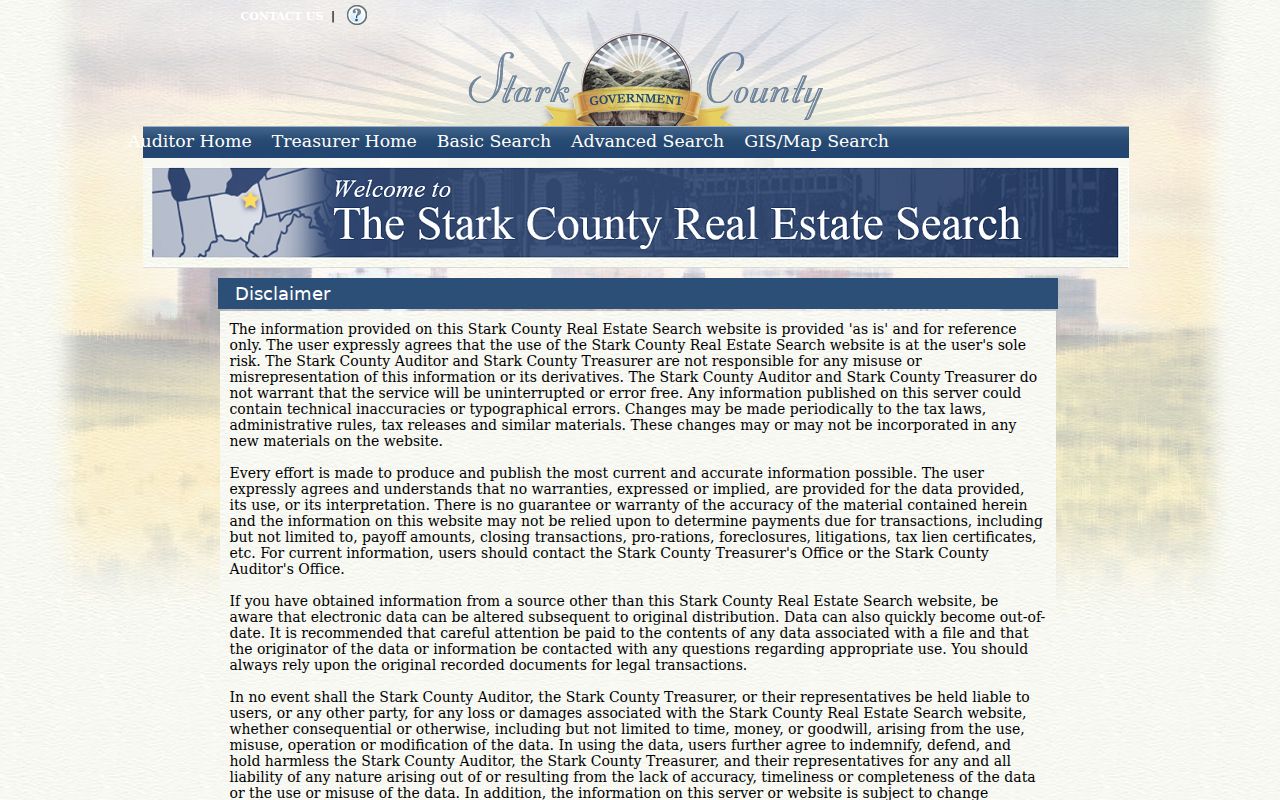
Use the result to capture the parcel and legal description, then verify any ownership question against the recorded instrument.
Alliance Resident Directory Sources
Official and published sources answer different questions. Property records supply parcel and ownership context. The voter system can confirm limited, allowed information about a named elector. The Recorder supplies parties to a recorded transaction. Courts identify public case events. Historic directory volumes preserve what their publishers printed in a particular year. Combining them is useful because each source has a defined scope.
| Alliance source | What it can confirm | Custodian | Access path |
|---|---|---|---|
| Property and tax card | Parcel owner, situs, mailing fields, sale and tax context | Stark or Mahoning Auditor | County search and record card |
| Recorded-document index | Deed, mortgage, easement, or other recorded parties | County Recorder | Online entry or counter |
| Voter record | Permitted named-elector information | Ohio Secretary of State and county board | Name, county, then result-specific street selector |
| Court or probate index | Public party, case, or estate event | Municipal, county, or federal court | Official court path and counter |
| City directories and Review | Published historical address, initials, and community context | Rodman and Alliance Memory | Digitized search or staff-assisted shelf |
Official records have a clear custodian, stated scope, and a way to request the original or clarify a result. Commercial people-finding lists may combine sources, charge a fee, and carry stale or mismatched details. Treat that category as a prompt to verify with the named public office, not as proof of identity or location.
Alliance Voter Record Limits
Ohio Voter Lookup is designed for a particular name and county. First name, last name, and county are required. A street-name selector appears only after a match, so it is not a public way to browse every address on a street. The state suggests trying a name variant, former surname, prior address, or prior county when an expected person does not appear.
Ohio law makes voter name, birth date, current residence address, precinct, registration date, voting history, and last activity date part of the statewide public database, subject to protected-record exclusions. Voting history identifies elections in which participation was recorded. It does not show a ballot choice. Social Security and ID information, phone and email data, protected addresses, and Safe at Home information are excluded.
| Required lookup fields | First name, last name, and county. |
|---|---|
| After a match | Street Name can narrow same-name results. |
| Office fallback | Board of Elections inspection and list rules apply, with protected records excluded. |
Alliance Deeds Follow Parcels
The Stark County Recorder maintains permanent real-estate documents, including deeds, mortgages, and easements, and identifies county land documents reaching back to 1809. Start with the property card's current sale, parcel, and legal description. Then look for the buyer as a grantee and the earlier party as a grantor. Match the legal description or lot and block before moving to the next document. This is stronger than guessing from a street number alone.
The current Kofile interface did not expose a verified online coverage cutoff or a confirmed address-search control during research. That makes the Recorder counter a real fallback. Bring the parcel, legal description, names, and date range, and ask for the historical grantor-grantee route or document image/book-page connection. Recording fees are not the same as certified-copy prices, so confirm any copy cost directly with the office.
- Parcel or PIN
- The county identifier that ties a property card and map to one piece of land.
- Situs
- The physical property location shown on the record, distinct from a mailing field.
- Grantor and grantee
- The party transferring an interest and the party receiving it in a recorded instrument.
- Legal description
- The lot, block, subdivision, or other land description used to match deeds across address changes.
FraudSleuth is the Recorder's free name-based alert service. An alert can match another person with the same name, so inspect the parties, parcel, date, and legal description before concluding that a filing concerns the person you know.
Alliance Court and Vital Routes
Alliance Municipal Court is the local limited-jurisdiction route, while the Stark Clerk of Courts handles Common Pleas civil, criminal, domestic-relations, and appellate matters. The Clerk states that computerized dockets begin January 1, 1985 and directs older index questions to the counter. A docket lead should be saved with party spelling, case number, division, and filing year before requesting a document. Public availability still depends on confidentiality and sealing rules.
Use Northern District of Ohio court records information for the federal alternative when the known case belongs in that system.
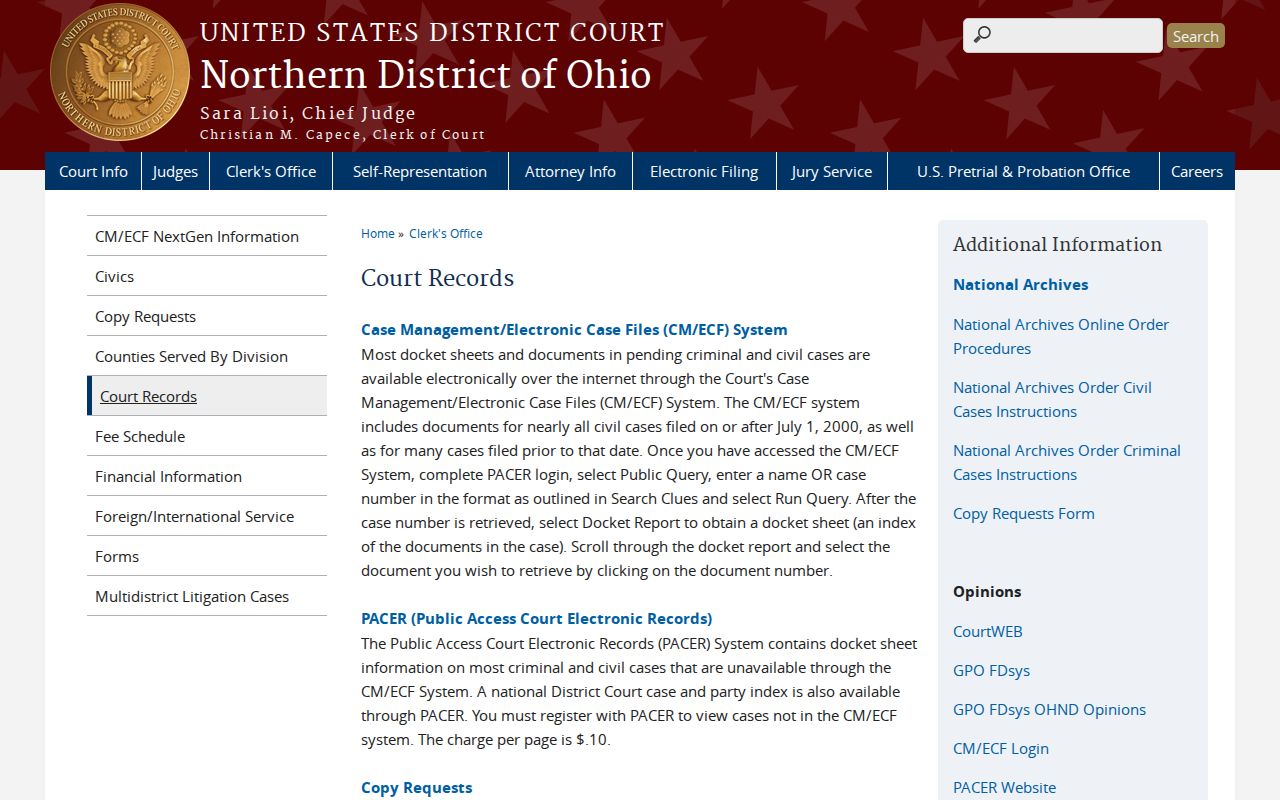
The federal court route uses a name or case number through its stated public-access process and does not make sealed material available.
The Alliance Health Department is a local access point for birth and death certificates. It is not a public online name index. Certified birth and death copies are $25 at the local route; Ohio law uses a signed application and fee, with specific exceptions. Stark Probate is the county route for marriages issued there and offers historic marriage, estate, will, and naturalization pathways. A Stark certified marriage copy is listed at $2.
See the Alliance birth and death certificate service before submitting an application. The source shows the local registrar channel that connects an event record to the appropriate state or local custodian.
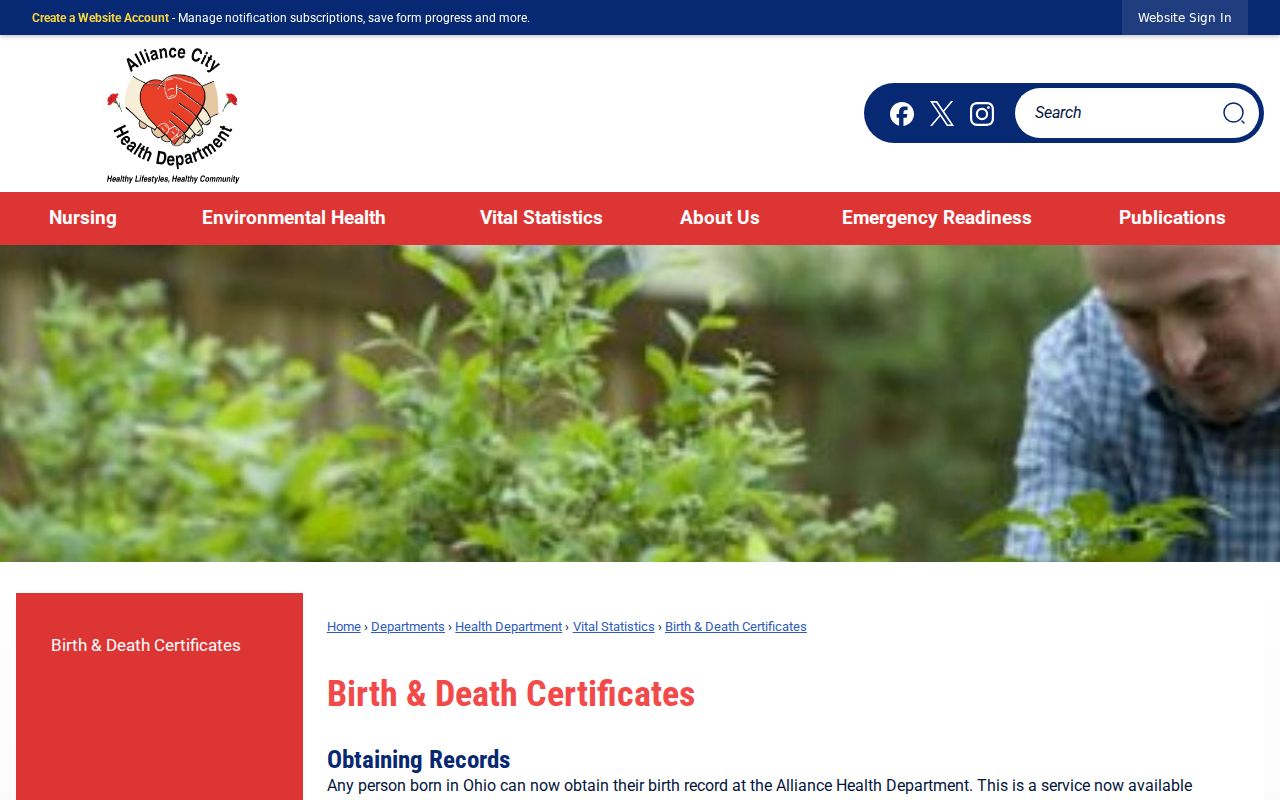
For a case or certificate, preserve the office, date range, and identifier instead of asking a clerk to reconstruct a broad personal history.
Alliance Historical Directory Shelves
Rodman Public Library's Alliance Room holds city directories from 1876 and Alliance Review microfilm from 1871 to the present, alongside census information, yearbooks, clippings, and local history material. The free Alliance Memory City Directories collection allows full-text searching of names, addresses, businesses, articles, and advertisements. A missing online hit should not be read as absence from the directory era when the physical run may hold the needed year or a reverse street volume.
Two confirmed digitized books give the online collection a concrete early spine: the 1868 McKee Business Directory and the 1897-98 Official Alliance City Directory. The later volume includes alphabetical inhabitants, a special street directory, classified listings, and civic, church, school, and association lists. A city-directory entry records what its publisher placed in that edition, not a continuing address or title to property. The focused collection details are available in the Alliance city directory.
Visit the Rodman genealogy resources for the local-history access points. The library's research screen anchors the Alliance Memory, yearbook, obituary, newspaper, and in-library database route.
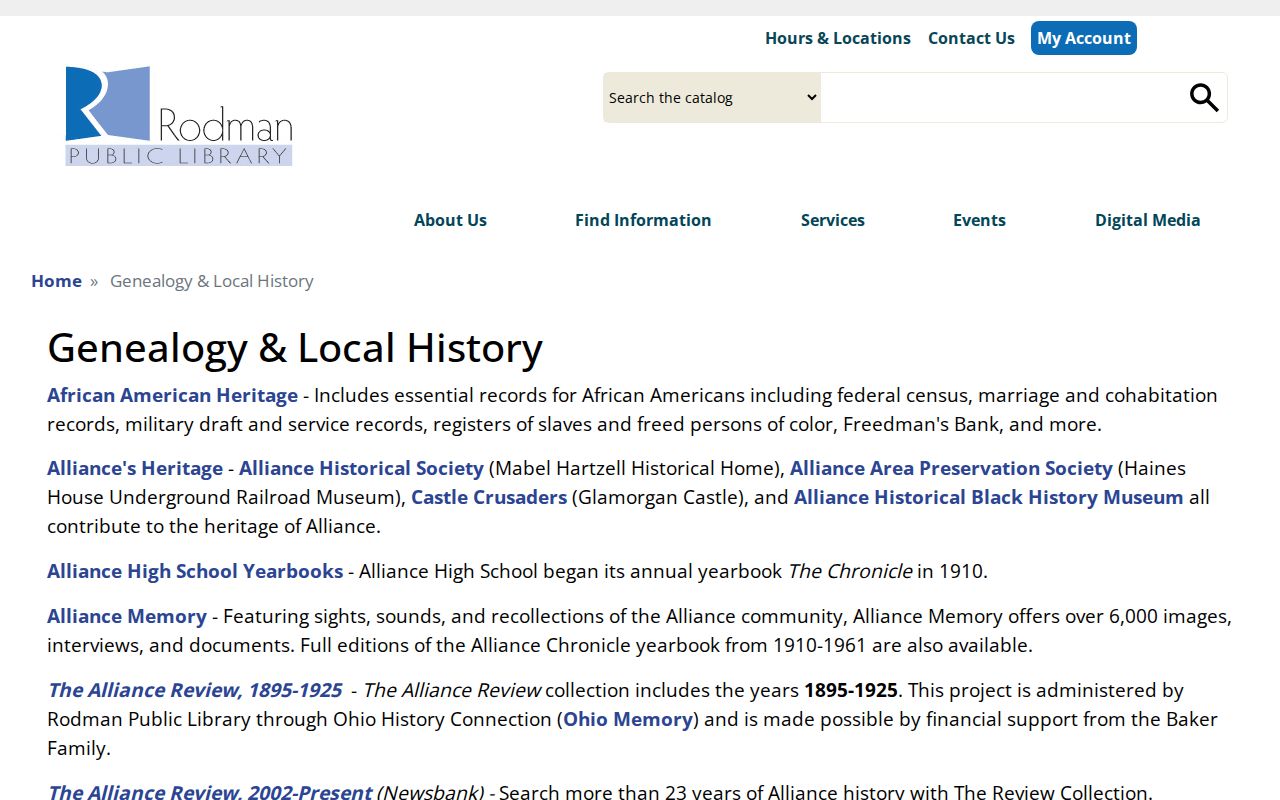
Ask Reference staff whether a particular microfilm run or licensed database is available on site before making the trip.
Alliance Archive Digitization Numbers
Alliance's municipal archive is a records context source, not a resident list. A City and Rodman project digitized 12,998 pages as 1,742 municipal-record PDFs for the 1854-1924 period. The City Archive Center and ordinance collection can help locate minutes, civic actions, street references, and public-improvement records tied to a known time and place. They are especially useful when a historic address seems to change shape in a later directory or map.
Sanborn maps for Alliance span 1867-1970 in the local-history material. They can show building footprint, use, and street context for a period. City ordinances and minutes should be checked for a specific suspected street or address change. Research did not identify an authoritative citywide renumbering year, so no single date should be assumed.
Open the Alliance Memory City Directories collection to see the digitized local-history source used here.
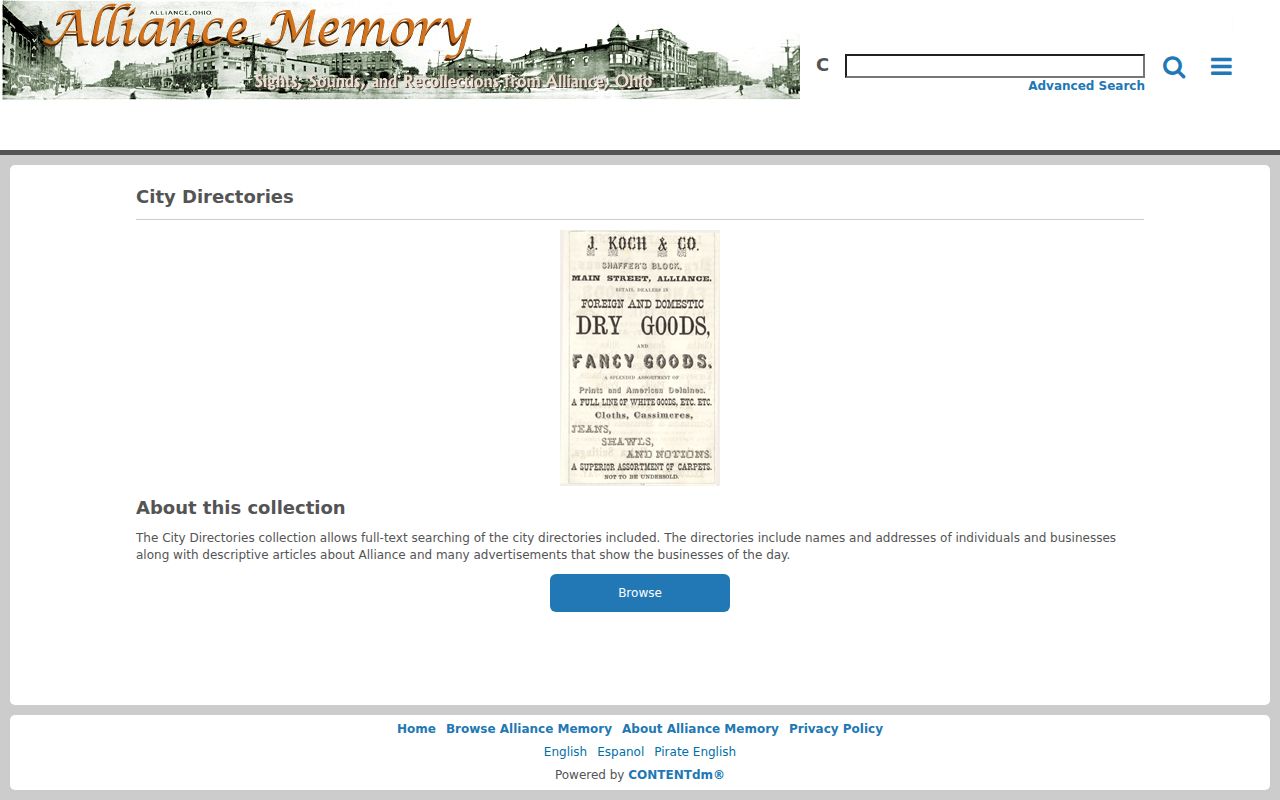
For a dated civic or address-context question, the Alliance municipal archive collection is a better starting point than a current parcel screen. Preserve the exact street direction, historic place name, and date because those details can change the result.
Alliance Privacy Ends Some Searches
Some records are correctly unavailable. Safe at Home participants are removed from public voter lists and the statewide database. Ohio voter protections also exclude sensitive identifiers, contact details, and protected addresses. Motor-vehicle personal information is restricted. Court files can be sealed or redacted, and birth and death records have specific protected fields. An absent result may reflect a legal boundary rather than a search mistake.
See the Ohio Safe at Home statute for the program's eligibility and substitute-address framework.
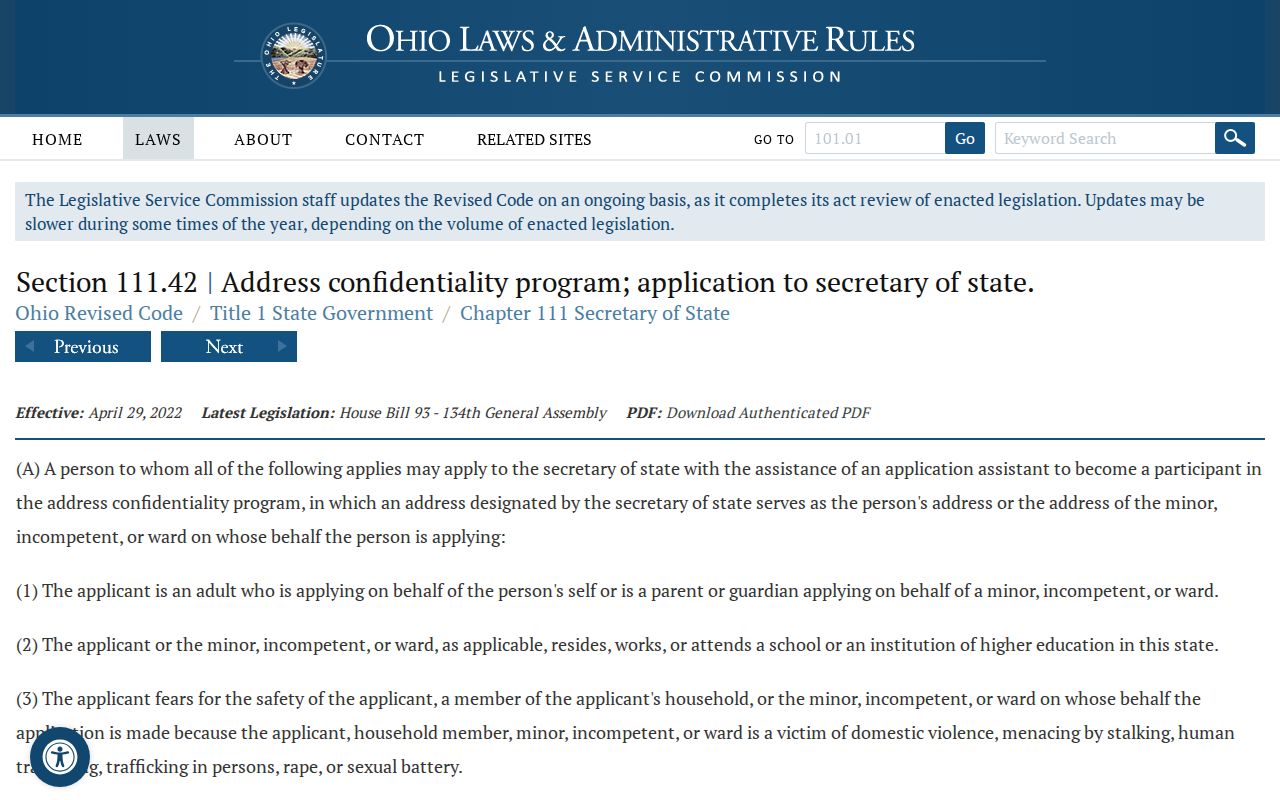
Safe at Home is a protection to honor, not an address-research method to work around.
Use public information for family history, estate questions, consumer safety, civic transparency, and other lawful personal purposes. Do not use a record trail to stalk, harass, intimidate, or harm anyone. A protected record should remain protected; the proper next step is to respect the restriction or ask the custodian what public portion, if any, is available.
Requesting Alliance Public Records
Ohio's Public Records Act, R.C. 149.43, gives any person the right to inspect existing public records promptly during regular hours and obtain copies within a reasonable time. A request need not be written, and an office cannot require identity or purpose. For a complicated matter, a short written request helps identify the exact record. Name the office, record type, address or person where relevant, date range, preferred medium, and willingness to pay actual copy or postage costs.
Read the Ohio Public Records Act before framing the request.
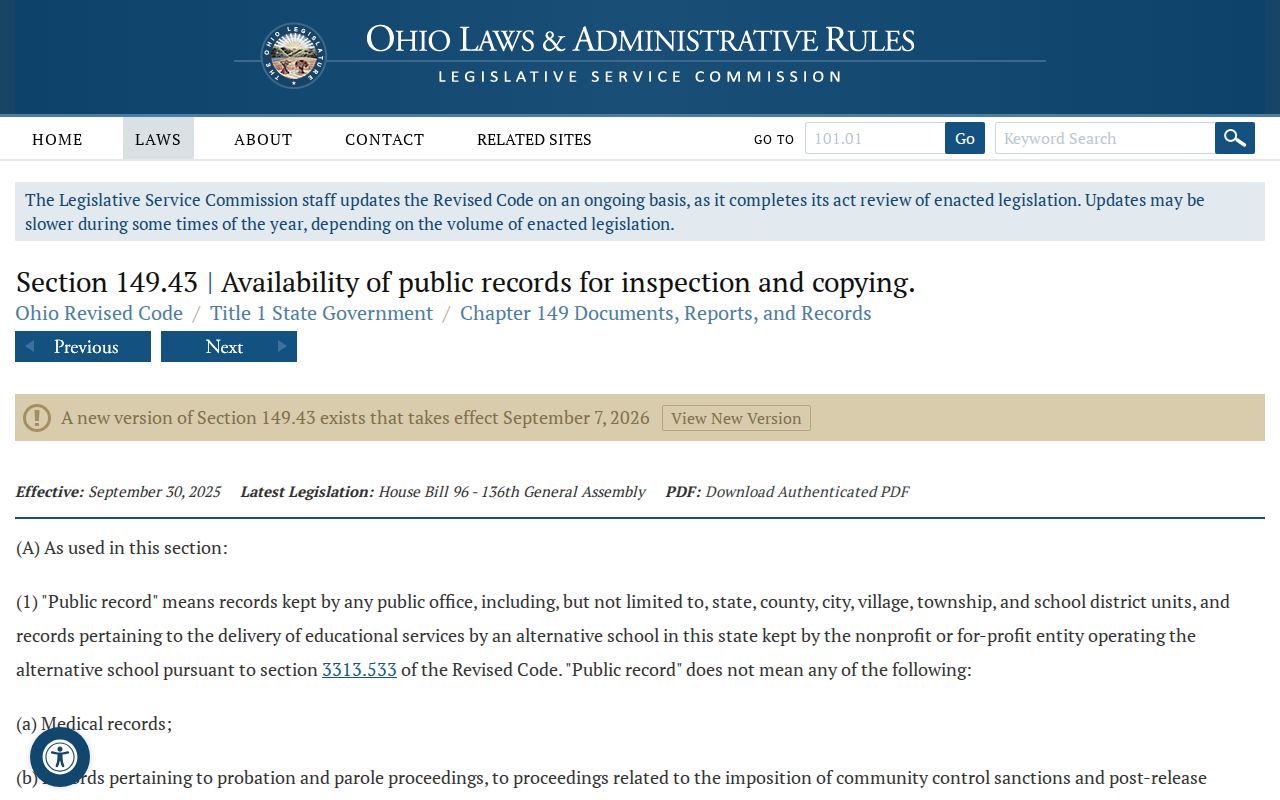
The statute is the statewide access baseline, while each Alliance or county custodian has its own procedure for identifying a record.
Inspection is free. Ordinary duplication is limited to actual cost rather than labor or overhead, but an office does not have to create a record or perform research. If a record is withheld, ask for the cited legal basis and for a redacted release of the remainder where allowed. The practical fallback for a failed portal is usually a focused request or counter visit, not a broad demand for an office to locate a person.
The Ohio Attorney General's Public Records Act guidance is another official access reference.
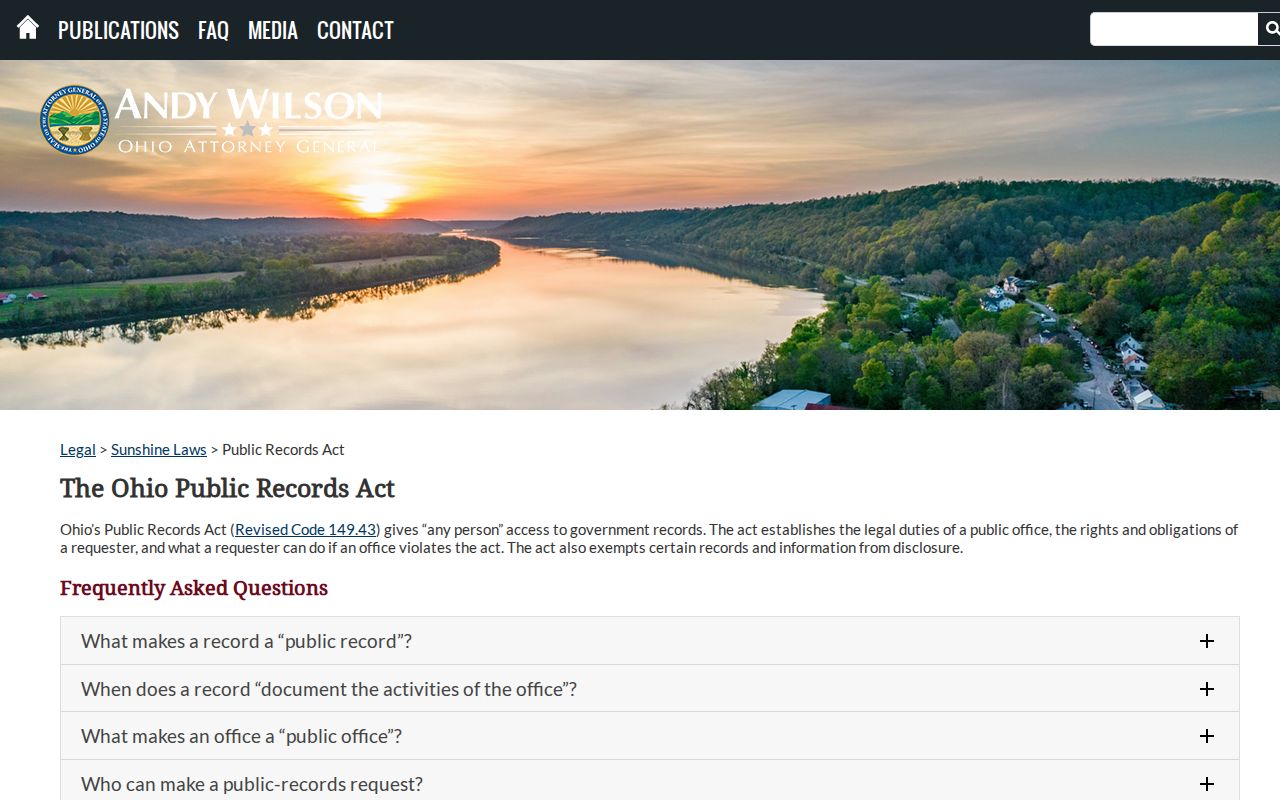
State the narrow record sought and keep the response with its date, so another custodian can understand exactly what was already checked.